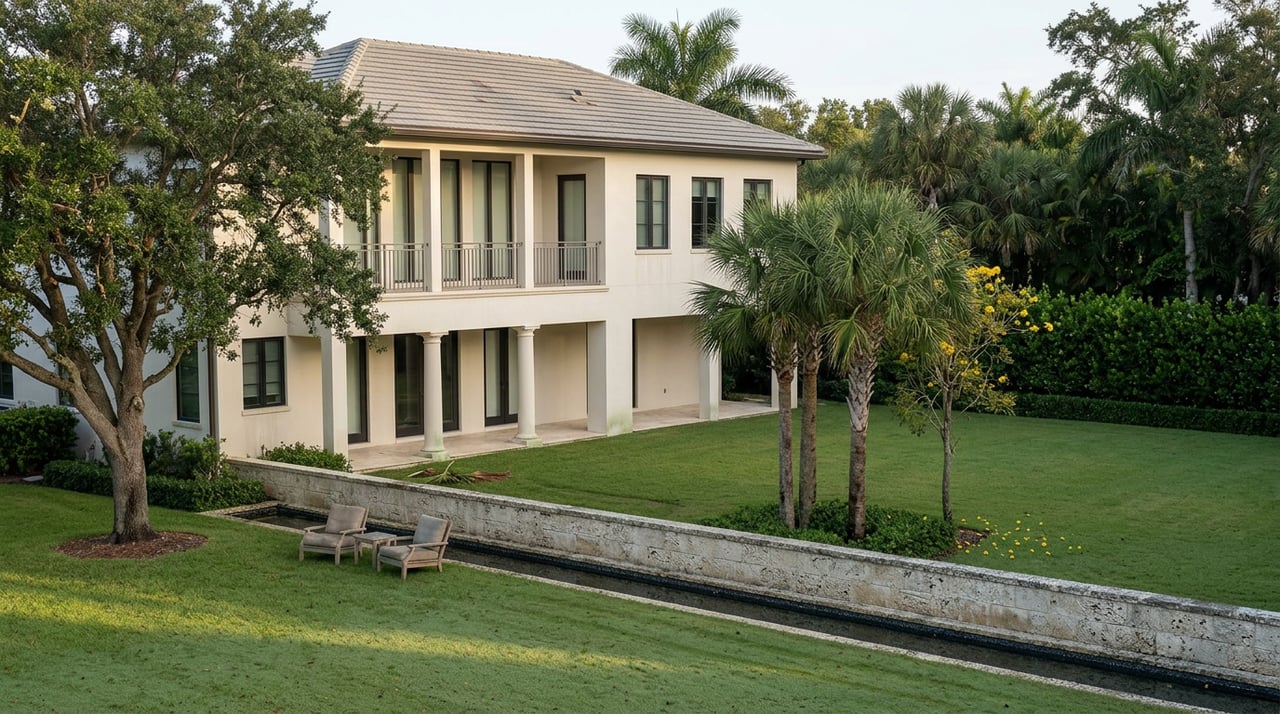
Birding at Eagle Lakes Community Park Near Eagle Creek
September 10, 2026
September 10, 2026
Ask anyone inside the gates at Eagle Creek where to see birds and they will point you toward the course. That's fair. The club has held Audubon Cooperative Sanctuary status for years, runs an organic-first program on the fairways, and keeps bird boxes and osprey nests scattered across its 300 acres. Ospreys circling the 9th hole are a familiar sight on the course.
A different birding destination is two minutes up Tamiami Trail East. Donna Fiala Eagle Lakes Community Park sits just past Rattlesnake Hammock Road, close to Eagle Creek, and the Florida Birding Trail lists it as a hotspot with more than 220 recorded species. Its habitats offer a birding experience distinct from the golf course's managed grounds.
Eagle Creek's course was built in 1983, designed by Larry Packard and later reworked by Gordon Lewis, and its 300 acres of cypress, pine, and open water attract wildlife. The bird boxes, osprey nests, and sanctuary designation are features of the course. Its managed landscape includes fairways and greens, open-water edges, and mowed sightlines, where ospreys and herons are among the birds seen.
Eagle Lakes Community Park has ball fields, a track, and a fitness center out front. Behind the ball fields, the track, and a eutrophic holding pond is a berm system circling two water reclamation ponds. According to the Florida Birding Trail's own site notes, those reclamation ponds host Green-winged Teal, Lesser Scaup, and American Bittern through the winter months, species recorded at the park during winter. Bald Eagle, Short-tailed Hawk, and Osprey show up there year-round, and Swallow-tailed Kites move through between spring and fall. Come winter, native plantings around the ponds pull in more than twenty species of wood-warbler, including Canada and Nashville, plus Painted Buntings and sparrows like Grasshopper and Swamp. The site has also turned up genuine rarities in recent years: Eurasian Wigeon, Swainson's Hawk, Western Kingbird, Scissor-tailed Flycatcher.
Here's a comparison of the two birding settings:
| Where You're Standing | What You'll Reliably See | Why |
|---|---|---|
| Eagle Creek golf course | Osprey, herons | Managed lake edges and mowed sightlines favor open-water waders |
| Eagle Lakes reclamation ponds | Teal, scaup, bittern, warblers, sparrows | Berms and reclaimed wetland habitat provide cover for species such as ducks, bitterns, and sparrows |
| Eagle Lakes in migration season | Swallow-tailed Kites, rare vagrants | Native plantings and less foot traffic make it a stopover, not just a residence |
Golf course lakes and reclaimed ponds have different landscape features. Golf course lakes have clean edges and consistent mowing; the berms around Eagle Lakes' old reclamation ponds are semi-wild, with native plantings that provide tangled, low cover for ducks, bitterns, and sparrows. These habitat differences help explain the bird species reported at Eagle Lakes.
One birder's field notes from a February visit offer a snapshot of birding at the park. Working just two of the park's three ponds over three hours, roughly two miles of walking, the count came to 43 species, with the visit landing squarely in the wintering season when the numbers run highest. Along the way came a pair of otters working the water's edge and an anhinga close enough to photograph without a long lens.
The park actually offers two distinct routes, and picking the right one depends on what you're after.
Parking is free at every lot, and the observation platform near the entrance is worth a stop before you commit to a direction, since it gives you a read on which pond is active that morning before you commit to a route.
A few practical details are worth knowing before your first visit, since they're easy to miss on a first pass through the gate:
Eagle Creek's golf course and nearby Eagle Lakes Community Park offer different settings for birding. The park's reported birdlife includes wintering ducks, warblers, and occasional rarities, and its reclaimed ponds and native plantings are part of that habitat. If you live at Eagle Creek and have not visited Eagle Lakes, it offers another nearby place to explore.
If you're already living this stretch of Naples and want a longer read on what else sits within a short drive of Eagle Creek, or you're weighing what a property near this corridor actually offers day to day, Maria Oddy knows the area well enough to walk you through it. Schedule a consultation whenever the question moves past birdwatching.
Stay up to date on the latest real estate trends.
With my results-driven approach, disciplined negotiation strategies, excellent work ethic, and natural communication skills, I know how to fight for the terms you deserve. This is precisely why my clients have trusted me with their properties in Naples and Marco. The process works, and I make it a seamless and simple experience for you.