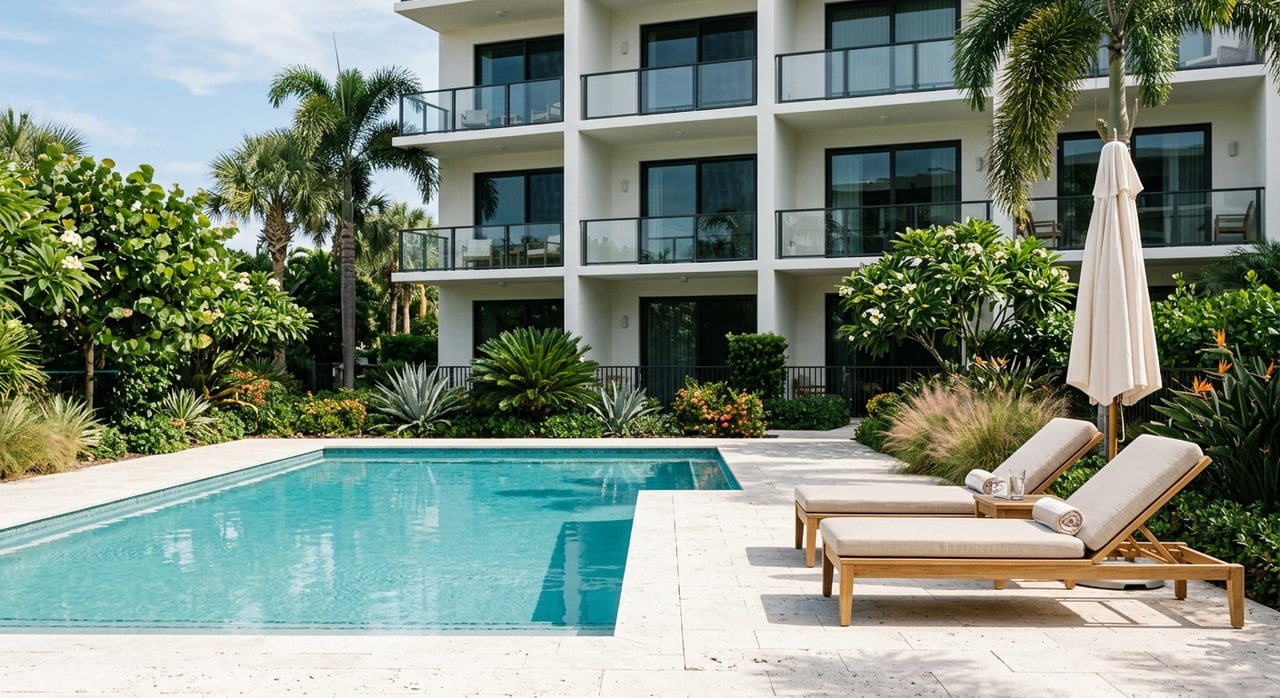
Buying A Condo On Marco Island: HOA And Amenities
May 28, 2026
May 28, 2026
A Marco Island condo can look simple on paper, but the real decision often comes down to what the association actually covers and how the amenities really work. If you are buying from out of the area, comparing a few beautiful listings can quickly turn confusing once you start sorting through dues, beach access, parking, docks, and inspection records. This guide will help you understand the condo side of ownership on Marco Island so you can weigh lifestyle, costs, and building health with more confidence. Let’s dive in.
Marco Island is a barrier island with six miles of beach, more than 100 miles of waterways, and a permanent population of 16,521 that rises to about 40,000 in peak winter season. That seasonal rhythm shapes how condo living works, especially when it comes to beach access, water access, parking, and how heavily shared amenities may be used.
It also means you should compare a condo’s amenity package with what is already available across the island. Marco Island has city or public recreation options including beach access points, Tigertail Beach, Mackle Park, and the Racquet Center, so “near amenities” is not the same thing as “private amenities included in your dues.”
If you are considering a beachfront building, there is another practical layer to know. The city’s sea-turtle and shorebird protections include guidance to keep exterior lights out or shaded by 9 p.m. during nesting season, which can affect how some buildings handle exterior lighting.
One of the biggest buyer misconceptions is treating a condo association like a standard homeowners association. In Florida, condos are governed under Chapter 718, while HOAs are generally governed under Chapter 720.
That difference matters because when you buy a condo, you are not just buying the interior space of your unit. You also own an undivided share in the common elements, and the board administers the association.
In practical terms, that means the declaration, bylaws, and current rules deserve the same attention as the listing photos and floor plan. If you are buying a Marco Island condo for the beach, boating, or lock-and-leave convenience, the governing documents will tell you what is actually included, what is restricted, and what may cost extra.
Florida law outlines official records that buyers should ask to review. For a condo purchase, the key records often include:
Florida law also requires official records to be kept within the state for at least seven years, with some records retained permanently from inception. For you as a buyer, that means important building and financial history should be available for review.
Amenities are often the reason buyers choose a condo on Marco Island in the first place. Still, the headline list in a listing sheet does not always tell you how those amenities are accessed, who can use them, or who pays to maintain them.
Florida law provides that common elements and recreational facilities serving a condominium must be available to unit owners and their invited guests for intended use. Even so, the declaration and rules still control how that access works in practice.
When you compare Marco Island condos, ask exactly how beach use is handled. Depending on the property, access may be through the condo itself, through a residents pass, or through public beach access only.
The city states that residents can obtain Residents Beach and Sarazen Park South Beach passes through MICA, while South Marco Beach and Tigertail Beach are public options. That makes a big difference when you are deciding whether a building offers direct beachfront convenience or simply a good location near public access.
A building may advertise tennis, fitness, social space, or recreation access, but you should confirm whether those features are on-site and private or simply located near city amenities anyone on the island can use. Marco Island’s public recreation options can be a real benefit, but they should not be confused with amenities funded by your condo dues.
This is especially important if your purchase is lifestyle-driven. If you want a building that supports a true walk-out-and-enjoy routine, you will want clarity on what belongs to the condominium and what is simply close by.
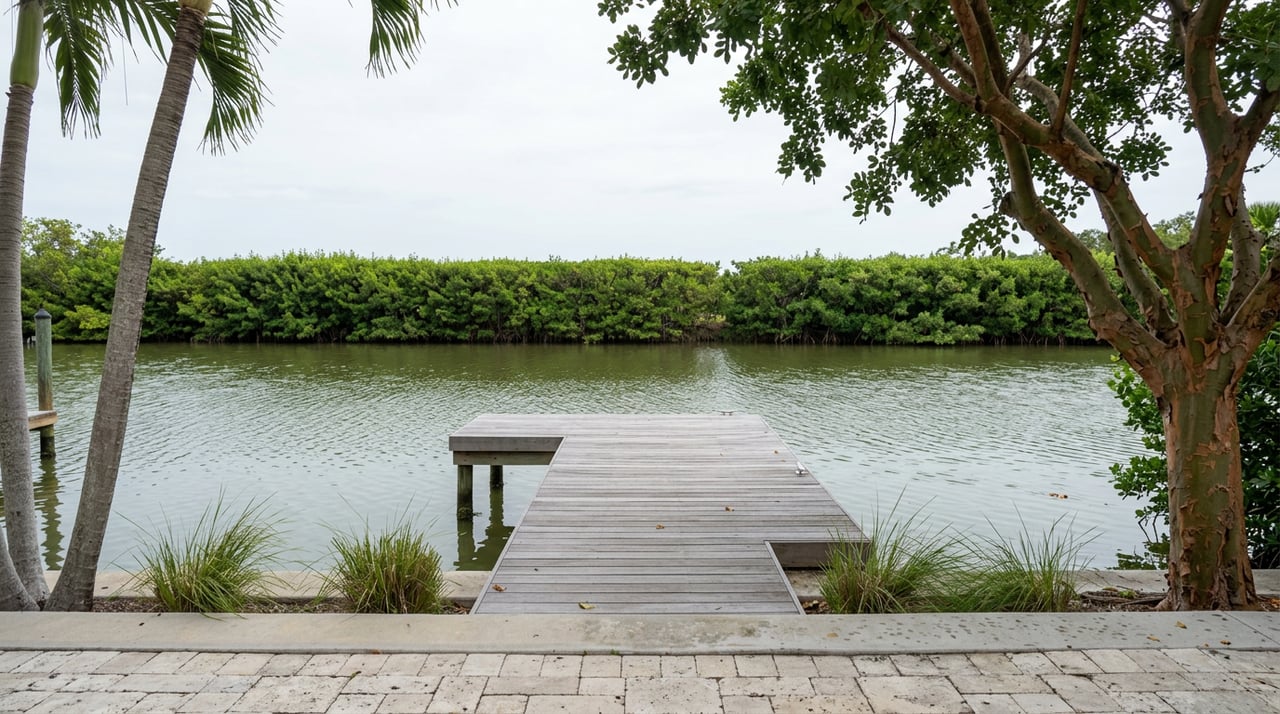
Some of the most valuable condo features are not the flashy ones. Parking spaces, storage lockers, docks, balconies, and cabanas can strongly affect convenience and long-term value.
You should confirm whether these are common elements, limited common elements, or something deeded or assigned. That label can change who has the right to use them and who is responsible for related costs.
Monthly dues can look straightforward, but condo ownership is often more layered than buyers expect. In Florida, the association is generally responsible for common-element maintenance unless the declaration assigns responsibility for a limited common element to the owner.
There is also a separate layer involving hurricane protection. The declaration can shift responsibility for shutters, impact glass, windows, and doors, so it is important not to assume that every exterior component is handled by the association.
It is tempting to treat a lower monthly fee as a win, but dues alone do not tell the full story. A building with deferred maintenance or underfunded reserves may look cheaper now, yet future costs can return later through higher dues or special assessments.
That does not mean every lower-fee building is a problem. It simply means you should compare the full carrying cost alongside the building’s maintenance posture and reserve planning.
Florida law states that unit owners are liable for assessments while they own the unit. It also provides that owners can be jointly and severally liable for unpaid assessments that existed before transfer.
For buyers, this is one more reason to review the association’s financials and ask careful questions before closing. A well-managed purchase is about more than price per square foot.
On Marco Island, building condition is not a side issue. For many buyers, especially those considering older coastal towers, inspection status and reserve planning should sit near the top of the checklist.
A residential condominium must complete a structural integrity reserve study every 10 years for each building that is three habitable stories or higher. The study must inspect major components including the roof, structure, fireproofing and fire protection, plumbing, electrical systems, waterproofing and exterior painting, windows and exterior doors, and other items whose failure would affect those systems.
Existing unit-owner-controlled associations had a December 31, 2025 deadline, and if a milestone inspection was required on or before December 31, 2026, the structural integrity reserve study could be done at the same time, but not later than December 31, 2026. For a buyer, the point is simple: ask whether the study has been completed and what it shows.
Collier County adds another important local factor. The county states that buildings within 3 miles of saltwater are subject to milestone inspections at 25 years and every 10 years after that.
Because much of Marco Island condo inventory is coastal, this timing can directly affect older buildings. The state statute applies only to buildings three stories or more in height, so if you are looking at an older tower, confirm whether milestone inspection requirements apply and whether any follow-up work has been completed.
If you are trying to compare condo options clearly, these are some of the most useful questions to bring into your search:
These questions are especially helpful for out-of-area buyers who want low-maintenance ownership without surprises. On Marco Island, a polished showing does not replace careful document review.
When two Marco Island condos seem similar, it helps to compare them through a simple decision lens. Instead of focusing only on photos or monthly dues, look at the full ownership picture.
Prioritize these categories:
This kind of side-by-side review can save you from buying the wrong kind of convenience. The right condo is not just attractive. It should also be clear, workable, and aligned with how you want to live on Marco Island.
If you want a calm, structured way to evaluate Marco Island condos, Maria Oddy offers step-by-step guidance designed to help you compare amenities, documents, and building details with confidence.
Stay up to date on the latest real estate trends.
With my results-driven approach, disciplined negotiation strategies, excellent work ethic, and natural communication skills, I know how to fight for the terms you deserve. This is precisely why my clients have trusted me with their properties in Naples and Marco. The process works, and I make it a seamless and simple experience for you.